



 English
To build a consistent brand image and strengthen customer perception, an automotive OEM needs to ensure that sales advisors, delivery specialists, and online support agents across all touchpoints are trained to use standardized key phrases when engaging with customers. Traditionally, headquarters relied on mystery shoppers posing as customers to monitor store performance—issuing corrective actions and penalties for non-compliance.
Pain Points
* Marketing materials provided to channel partners are highly homogenized, and with platform price restrictions in place, sales are increasingly concentrated among top-performing stores.
* Small and micro-sized online stores suffer from low exposure and click-through rates.
* These smaller stores lack the resources to produce high-quality content, often spending excessive time making minor adjustments using free or low-cost image editors—with limited results.
* Different channels require different image specifications, forcing teams to repeatedly reformat assets during product launches—a time-consuming process that delays time-to-market.
Using Whale Echo, stores can define customized offline scenario tags—such as phone invitations, in-store reception, test drives, vehicle delivery, and follow-up calls.
Under each main scenario, sub-scenarios can be created for different stages of the sales script. Each sub-scenario can be configured with tags, scoring rules, and trigger words—completing the setup of standardized script evaluation criteria.
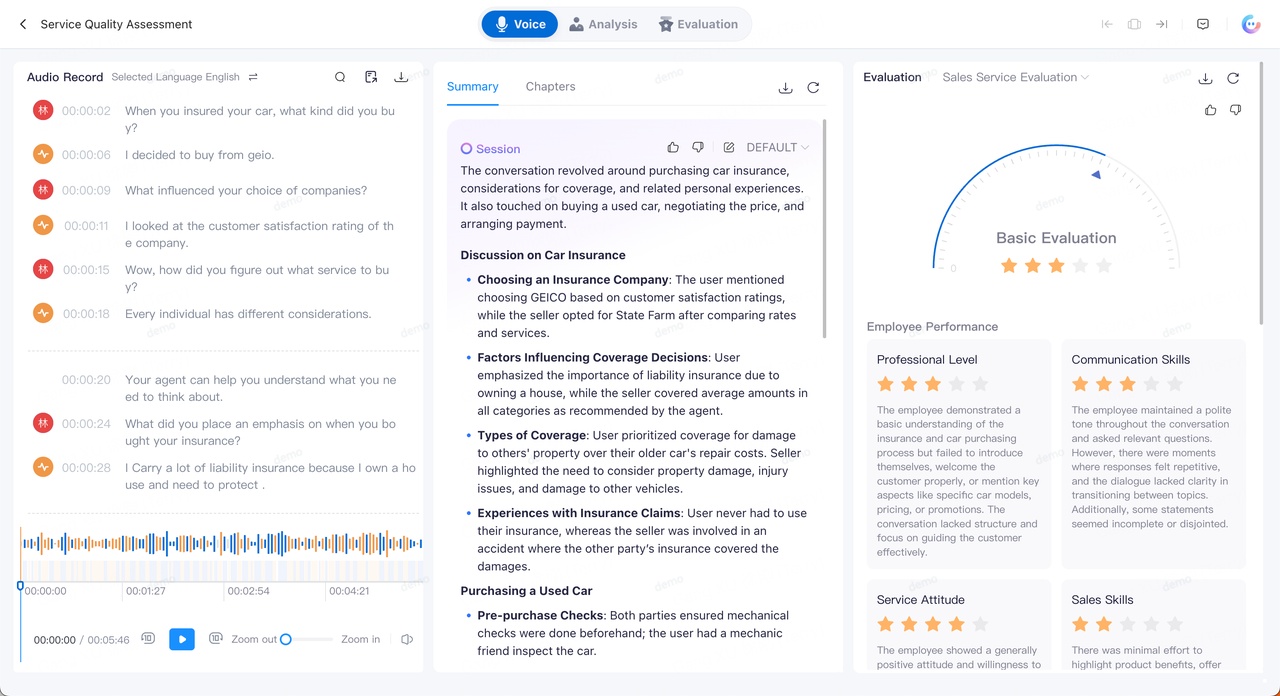
When a customer visits the store, voice badges record service interactions and automatically upload the audio. Managers can then review and analyze quality inspection scores for each scenario.
The system also provides an overview of script execution performance—making it easy to compare compliance across different stores and scenarios.
* Sales script compliance improved, strengthening the brand’s professional image.
* Customer satisfaction increased by 12%.
* Store conversion rate rose by 4%.
* Cost of store supervision decreased by 12%.